
Low Carbon Kapiti fights for wetlands
Why Wetlands Matter
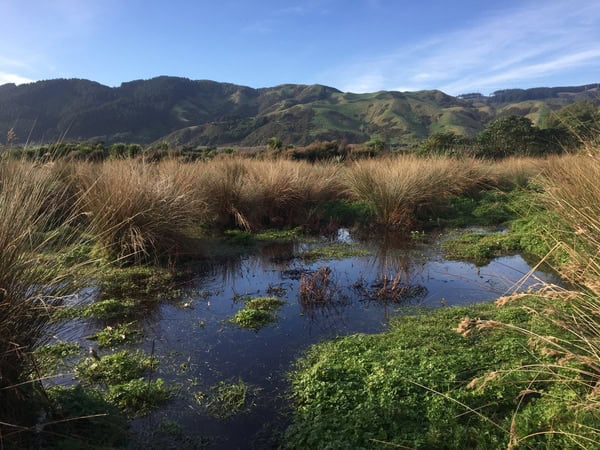
Wetlands are some of the hardest-working landscapes on the Kāpiti Coast – and some of the most overlooked.
The Kāpiti Coast sits on a young sand plain. Over thousands of years, wetlands have formed in the damp hollows between the dunes, layering peat over sand. Today more than 211 of these wetlands have been mapped here – 14 rated Outstanding and 197 Significant. They hold eight distinct plant communities, from forest and flaxland to reed, rush, sedge and herbfield, and shelter species that depend on this habitat to survive, including the secretive spotless crake, shortfin eels and native bullies.
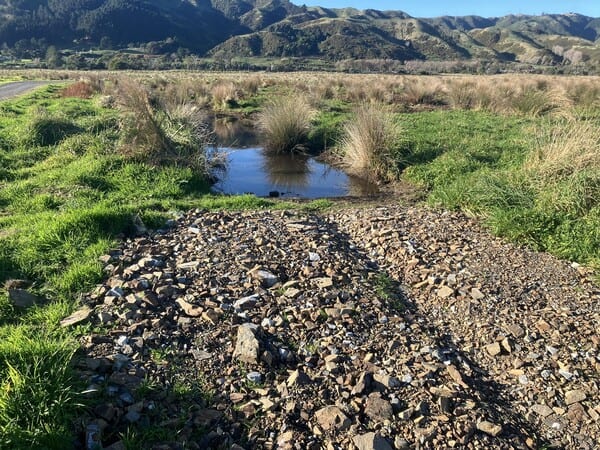
Quiet climate workers
For a low-carbon Kāpiti, wetlands are essential infrastructure. They are natural carbon sinks – peatlands in particular lock away carbon that has accumulated over centuries, and keeping them wet keeps that carbon in the ground.
But carbon is only part of the story. Healthy wetlands also:
Support recreation and connection to the places we live
Store and slow water, easing drought by releasing moisture through dry spells
Reduce flood risk by soaking up heavy rainfall
Filter water naturally, improving the quality of what flows downstream
Provide habitat for plants, animals and microbes — including many endangered native species
Taonga for the Coast
Wetlands are taonga of deep cultural significance to Māori. Protecting and restoring them is not only an environmental act but a way of honouring the relationship between people, water and land that has shaped this Coast for generations.
Under pressure
Kāpiti’s wetlands have been squeezed by urban growth, water take, and changing land use. Where channels and structures block the way inland, native fish can no longer reach the wetlands they once used, and numbers have fallen. Introduced pests — possums, stoats, weasels, mice and Canada geese — and weeds add constant pressure. Without care, these places quietly disappear.
Restoration in action
The good news is that wetlands can recover, and work is already underway. At Queen Elizabeth Park (QE2), eight wetland catchments are being restored as part of the Southern Wetland Restoration project. By building weirs and bunds to block old drainage channels, water is slowed and held, allowing the wetlands to return — supported by careful planting of native wetland species, fish-passage protection, and ongoing monitoring. The first four wetlands were restored in early 2026, with the remaining four scheduled for 2027.
Nearby, in the park’s peat country – once part of Kāpiti’s Great Swamp – there is potential to re-wet drained peatlands and rebuild their power as long-term carbon stores. It’s a complex undertaking alongside neighbours, roads, rail and power lines, and monitoring continues so the right decision can be made with good information.
You make this possible
Restoration doesn’t end when the planting is done. New and existing wetlands need ongoing care – pest control, weeding and replanting – and volunteers are at the heart of it. At QE2, volunteers have run pest control for over a decade. Every hour of that work helps protect biodiversity, store carbon, and keep these living landscapes here for the future.
Want to help bring Kāpiti’s wetlands back to life? Get involved with us.
Wetland Protection on the Kāpiti Coast
The Kapiti Coast is located on a geologically recently formed sand plain. The KapitiCoast wetlands have largely formed as dune slack wetlands and the soil iscomprised of peat on top of sand. Over 211 wetlands that have been categorised14of which have been designated ‘Outstanding” and 197 as “Significant”. Most are classified as swamps with a